


Prime Day 2026: According to Our Information, the Event Will Run from June 23 to June 26
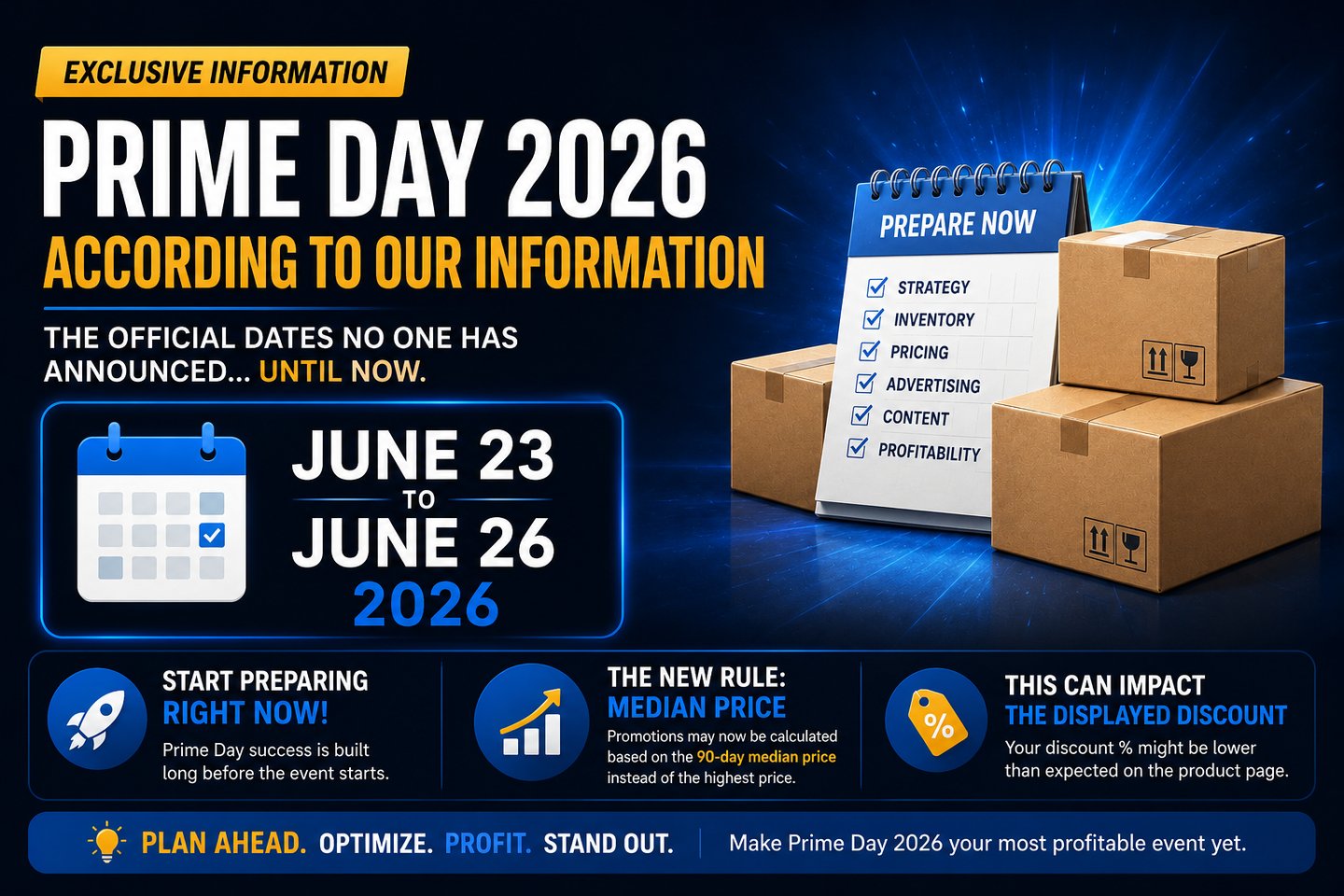
Get ready for Prime Day 2026. According to our information, Amazon’s biggest event of the summer is expected to run from June 23 to June 26. In this article, we explain why sellers should already be preparing their promotions, inventory, and advertising strategy — and how Amazon’s new median price reference system could impact the discount percentages displayed on your listings.
Basile Goutal
5/26/20262 min read

Prime Day 2026: According to Our Information, the Event Will Run from June 23 to June 26
Amazon has already confirmed that Prime Day 2026 will take place in June, but the official dates have not yet been publicly announced. According to our information, this year’s event will run from June 23 to June 26, 2026.
For Amazon sellers, this is not just a date to mark on the calendar. It is a deadline.
Prime Day performance is usually decided before the event starts. The brands that win are not the ones that react at the last minute. They are the ones that already have their inventory, promotions, advertising budget, product pages, and profitability targets under control.
Why sellers need to act now?
Setting a Prime Day promotion is not just about choosing a discount.
You need to check your margins, confirm your available stock, review your ad budget, and make sure the offer is strong enough to be visible without destroying profitability.
Amazon has also shared key preparation deadlines for Prime Day inventory, including FBA shipment deadlines in late May and early June depending on the shipment method. This means sellers should not wait until June to prepare their Prime Day strategy.
The important change: discounts may be calculated against the median price
One point sellers need to watch closely this year is reference pricing.
Amazon’s promotion logic can use a reference price based on the price customers actually paid over the last 90 days. In practice, this means your visible discount may not be calculated against your current list price, but against a median price Amazon considers more representative.
Why does it matter?
Because if your product has been sold at a lower price recently, the promotion percentage displayed during Prime Day may be lower than expected. A seller may think they are offering 20% off, while Amazon may display a smaller discount depending on the reference price used.
What sellers should check now
Before setting up promotions, sellers should review:
Current price vs 90-day median price
Expected Prime Day discount display
Margin after discount, referral fees, FBA fees, and ads
Stock availability before and during the event
Product page readiness: title, images, A+ Content, reviews, and keyword positioning
Advertising budget and campaign structure
Prime Day can generate strong sales, but it can also create unnecessary losses if the strategy is not controlled.
Prime Day is not only a promotion. It is an account management test.
At Tupia, we believe Amazon growth depends on four key pillars: marketing, profitability, stock, and brand content. Prime Day touches all of them at the same time.
If one of these areas is not ready, the event can quickly become expensive instead of profitable.
That is why sellers should start preparing now: not only to participate in Prime Day, but to make the right decisions before, during, and after the event.
Prime Day 2026 is expected to run from June 23 to June 26. The sellers who prepare now will be the ones with the best chance to turn this event into sustainable growth.